
1% Better in Action
What Results Could You Achieve?

I hear it all the time in farming. You can’t make money at these prices. Or... The farmers are squeezed and there is no way to make it work.
Back in January of 2025 I wrote my first 1% better article. You can read that here now: 1% Better.
The point behind the article was that there are hundreds, if not thousands, of transactions taking place on the farm every year. If you take the time to decrease each line-item expense on your tax returns by 1%, and also increase income potential by 1%, you could completely transform your bottom line while creating a more efficient and profitable operation. Improving margins by $50k/yr IS VERY POSSIBLE.
I still believe that opportunity exists, now more than ever actually. I put the 1% rule into action in my life over the past 3 years, and the result ended up being astonishing. Skip to the finish to see just how much improvement can be made.
The Start
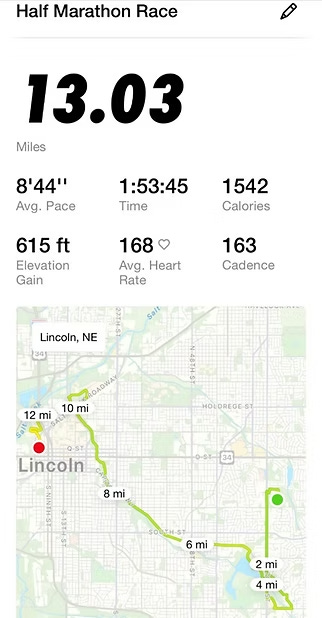
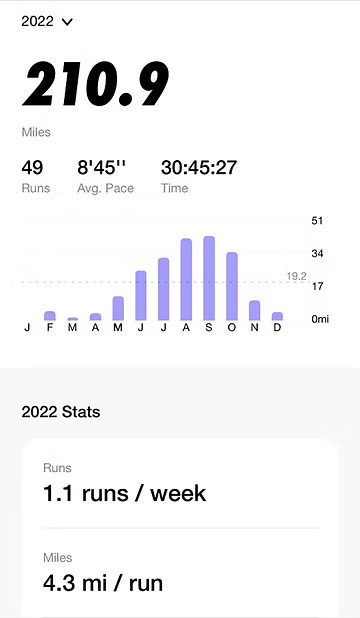
I didn’t start running in earnest until 2022, which is where my official half marathon PR has sat since then: 1:53.42. Here’s an outline of everything I have changed with running since that time to become 1% better in several areas, making a huge jump in my PR the half marathon.
Miles
Since my half-marathon PR in 2022, I ran my first marathon (4:27), ran a 50k ultra-marathon (it took forever), ran a half-marathon in the mountains (1:55), and did a number of shorter relays in the 3-6 mile range.
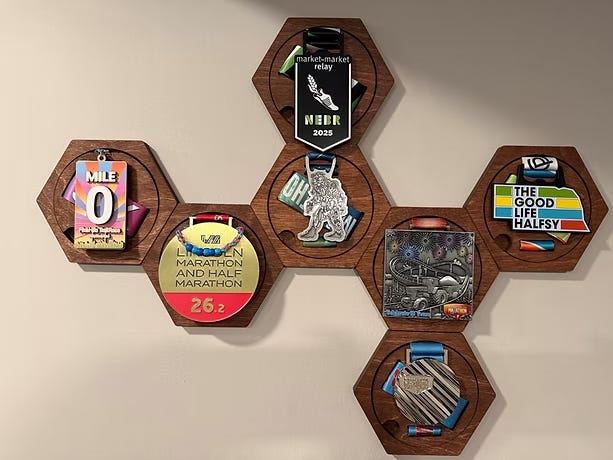
What actually got me excited about bumping back down to a half-marathon and chasing some speed was the success in those shorter relays. I didn’t think that I was capable of going fast until I actually ran some team distances closer to 3-6 miles and realized that sub-8 minute per mile running, from a racing standpoint, was in the cards for me.
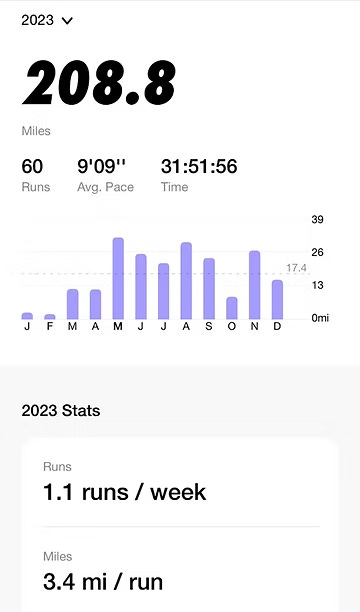
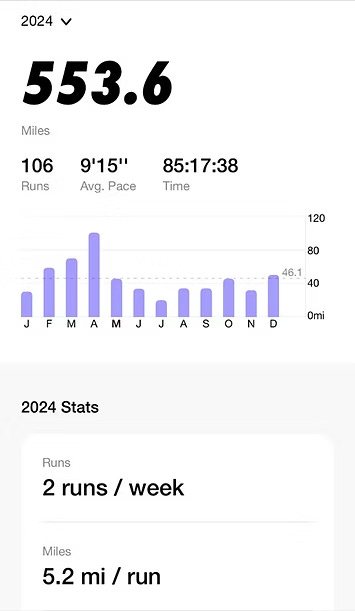
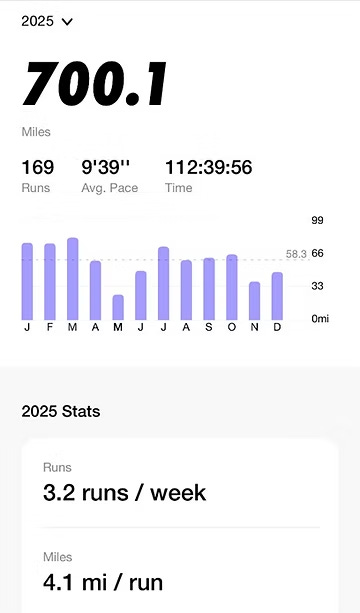
Now I’m attempting to go sub-7:40 minutes over 13 miles instead of 7:50 over 6 miles. It’s crazy how things have morphed and the speed has only started to take off in the past year and a half in my runs. Mileage has increased significantly, and I’ve had a number of injuries along the way. With PT, I’ve learned that rest is not good. I might rest for a week at most, but if the problem has not healed itself, I’m diving into diagnosis, elevation, rehab, ice, and heat.
From a running standpoint, adding miles at a slower pace has been huge. It’s been a lot of 4- to 7-mile runs at a 10-minute/mile pace, but it has helped keep me healthy and start running faster. Running five days a week consists of 1 long run closer to race effort, 1 day of strides or faster intervals, and every other day is a slow, 10-minute pace run.
When I was running 2-3 days per week, every run was at a higher effort. It is those slow, extra miles that have made a world of difference to my heartrate threshold and ability to maintain speed for much longer.
I’ve had a few hiccups with health, but aggressive treatment and putting the pedal down on PT every single day I feel has led to faster recovery.
Equipment
Everything listed below is new equipment I evolved into since my 2022 race.
- My headphones have been upgraded from over-the-ear Beats to open-ear Shocks, but I use them less frequently and just run in silence more often than not. Music, audiobooks or podcasts help you zone out, which leads to lethargic running, which leads to slower running. If you want to get better, it takes FOCUS.
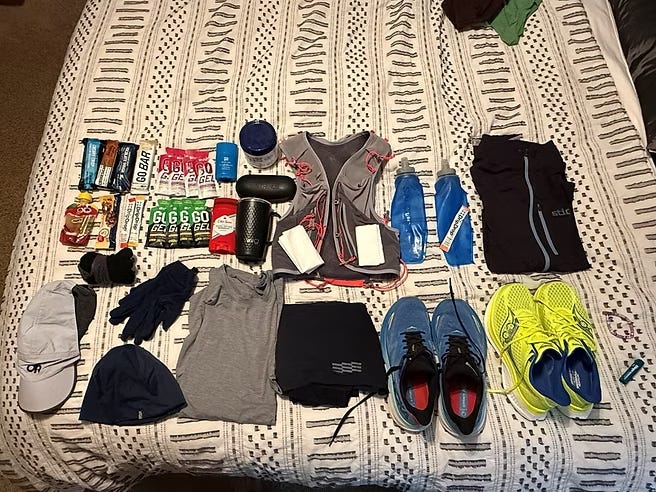
- I’ve been wearing the Hoka Clifton 9s as my heavy mileage tank since 2022, but finally did get a pair of lighter, slightly more aggressive running shoes for sprints and races. These are not high-dollar, carbon plated shoes, but the Saucony Endorphin Speed which is a lighter and more aggressive shoe. I also learned to not wear older shoes for any runs over 3 miles after they have logged 300 miles and also moved to a shoe rotation so I am never wearing the same pair 2 days in a row. Running shoes need 48 hours to recover between runs. (The running world is wild.)
- I ditched the Apple Watch, which was fine for tracking, but switched over to the Coros Pace 3. I can better track the pace I am running and like the features and accessibility from a watch committed to running. Nearly everything about the Coros Pace 3 is worse than the Apple Watch except the fact that the battery life and running features are significantly better. I don’t miss the Apple Watch one bit.
- I finally found some shorts that are adequate for running. Previously, I was running in some Nike athletic tights with cotton athletic shorts over top, and there was a significant amount of discomfort in using these for long distance. The Janjii running shorts have been more comfortable and come with all types of pockets where I can hold gels, keys, and even my phone in a pocket below the hip. This allowed me to replace the arm band for holding my phone. I have invested in a couple of pairs of the same Janjii running shorts, and they also have fantastic running pants when dealing with the cold (which feels 6 months long this year). I do have a pair of nice, warm Stio tights for the winter months to fit under the Janjii pants that also have a large phone pocket and breath well.
-Simple REI running shirt.
-Stio wool stocking hat and gloves.
-Janjii toe socks were a game changer! I wear them for any run over 7 miles and blisters are basically non-existent now.
-Super light Stio windbreaker jacket that stores in the vest.
-Salomon running vest so I can skip aid stations, carry my nutrition, and keep running.
-Stio buff for cold runs.
-Outdoor Research running hat.
Cold weather runs require: Stio warm tights, Janjii pants, SmartWool base layer, breathable vest, North Face jacket, Stio buff, Stio beanie, Stio mid gloves, and ski goggles if there is a fierce wind. This setup works between -20 degree windchill all the way up to 30 degrees by working with layers and different weights of the items listed.
Injury Prevention
- More stretching. I stretch for around 10 to 15 minutes before I go out every single day. The focus has been on my foot, calves, and hip flexor, which I’ve discovered are weak points in my body. Off days include stretching as well.
- I also bought a Mobo board for foot strength, ankle strength, and stability which I believe has been key to keeping my foot healthy and strong.
- There are a number of strength-building and preventative exercises to do on my off running days, so I’ve incorporated that strength building and recovery time into my routine.
- Another thing that was added was an infrared sauna. I do that 2-3 days a week for 20mins and believe that this has contributed to some body healing and less soreness after big efforts.
Coaching
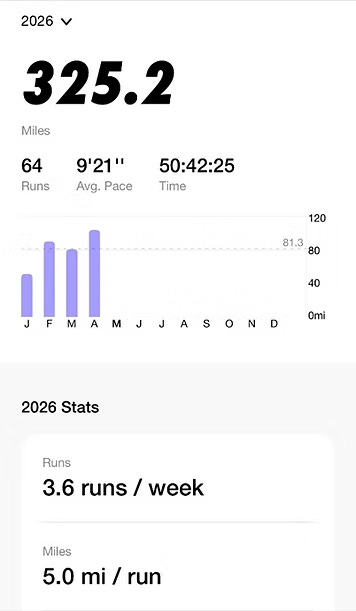
I spent years using the Nike Run Club app and Coach Bennett as my primary daily run planner (which are the screenshots I’ve posted). I highly encourage anyone just getting into running or wanting to get better at running to utilize the app and listen to Coach Bennett to learn about becoming a better runner.
For this ½ marathon training, used a training plan through my Coros watch which did a great job of keeping me on pace and tracking my efforts. I only use the Nike Run Club app now to track miles on my shoes and overall miles that I am running on a daily, weekly, and monthly basis. The app is still great, but I’ve done most of the recorded runs and learned all that I can through that resource. I have been utilizing the Coros watch to plan all my daily runs in 2026.
I don’t want to downplay having a coach though, even if it is just a recording. I learned a ton about running today through that app. Negative splits, slowing down on long runs, intervals, recovery, fartleks, running form, mindsets, stress release, running safety, it is all there.
Since my running habit picked up, google knows I’m interested which has led me to reading Ultra marathon running articles. I’ve also started tracking all the Western States golden ticket qualifying events, watched the livestream of 2025 Western States with my daughter, and am learning the top names on the Ultra circuit. I’m following youtube channels of a few of my favorite runners and am on the high-carb bandwagon with David Roche through his “Some Work, All Play” podcast.
Nutrition
- Energy bars have changed. I went from consuming a Nature’s Valley peanut bar to Barebell’s (20grams) protein bar before each morning run.
- Electrolyte consumption has changed. Occasionally I would drink a small Gatorade after the run. Now there is a low sugar Body Armor or low sugar Propel water with Drip-Drop powder mix throughout the day. The Drip-Drop powder is my electrolytes mid-race.
- The number of desserts has declined. I rarely consume sweets at any time outside of holidays.
- Carb intake increased significantly. Carb loading used to mean pasta the night before the race. Now carbs are a tool to use in-race to keep the body going. I will also train with carbs during high intensity workouts. Go gels (24 grams/gel) through BPM switching between caffeinated (75mg) and non-caffeinated between each consumption. Aiming for around 75-100 grams/hour during race.
- Caffeine has increased. Caffeine mid-race is crucial to keeping energy high and focus in place. Long distance running is MORE MENTAL than physical, and the caffeine helps the mental game. I’m also consuming a double expresso Nespresso each morning after my run and a Jocko Go energy drink (95mg caffeine) to get through the afternoons.
-Jocko greens and airborne the week before the race and during key stretches to keep me healthy.
- My meals are more scheduled and primarily consist of red meat or chicken with a carb, either bread, noodles, or rice. Typically for dinner: Saturday: steak or pork chop, Sunday: whole chicken, Monday: sausage link, Tuesday: beef tacos, Wednesday: chicken legs or thighs, Thursday: pizza might sneak in, Friday: hamburgers
- Breakfast has become a scheduled affair with: Saturday: sausage links and pancakes, Sunday: scrambled eggs and cinnamon rolls, Monday: leftover sausage links and pancakes, Tuesday: homemade yogurt and homemade granola, Wednesday: scrambled eggs, Thursday: frozen pancakes & sausage on a stick (my daughter loves making these), Friday: yogurt or eggs.
- Alcohol consumption is down to 1/week and eliminated a few weeks before the race.
Sleep
- I’m not sure when I started waking up at 4:30 every morning, but I’ve been doing it for at least the last 2 years. With that I’m almost never up past 9:15, even on weekends.
- More consistent wake-up time = more consistent bedtime. My body is more in sync and I’m not tired waking up at 4:30 in the morning. The consistency 7 days a week allows me to fall asleep fast and wake up refreshed.
- Short naps are more frequent and usually are between 10 and 12 minutes long after lunch maybe 2 days/week.
Results
2022 Old PR 1:53:42
2026 New PR 1:37:44
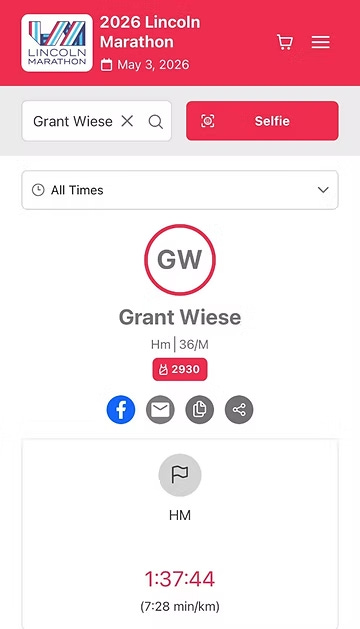
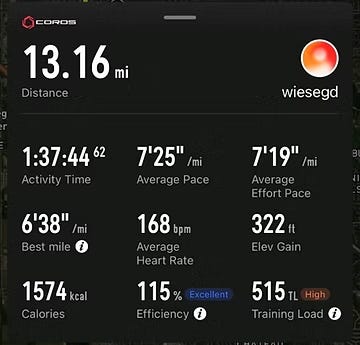
Almost 16 minutes faster and a 7.5% improvement on my time!
It was a great race. Everything that I mentioned above was utilized to get this result. I never thought sub 1:40 half marathon was in the cards for me, and I skipped right past the 1:40’s for this new PR.
There was a ton of work, learnings, and failure that went into this, but seeing the results pay off make it all worthwhile.
I placed 278 out of 4737 runners. What would my old PR have gotten me? 988th place.
Your Takeaway
Yes, I just spent 1900 words talking about getting better at running. That was kind of the point. There are 1,000,000 different ways that you can improve financial inefficiencies on the farm, way more actions than I believe that you can take to improve running.
What if you improved your income by 7.5% and decreased expenses by 7.5% next year on a
gross breakeven operation?
+$75,000 income
-$75,000 expenses
=$150,000 improvement to your bottom line
If I can change that many things about running in three years to get significant, 7.5% results, I believe you can transform your farm finances in huge ways by this time next year.
The only question left to ask??? Will you commit to it?
You get better at where you spend your time. I spent all this time running to get these types of results. You will not get better financially if you’re not spending time with it. That means getting into spreadsheets, learning about money, and finding ways to decrease expenses or increase profits.
If you don’t take the daily actions and you currently aren’t profitable, don’t expect the results to change.
You must take action to get better.
Legit just finished an article using my running experience as the analog haha
As such - loved reading someone else’s take here. Congrats again on the PR, but even moreso, the journey to get there!
Do you think you’ll keep at it for a few more years to see where the compounding takes you?